
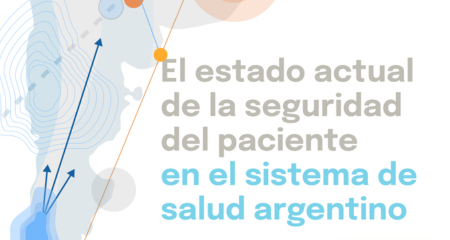
The first report from the Argentine Patient Safety Observatory compiled publicly available evidence on safety of care in the country's health system, identifying the current situation and opportunities for improvement in different thematic areas based on the findings.
The value of the report “lies not only in the data it presents, but also in its ability to detect gaps and omissions in the information: this allows us to identify where the collective efforts of institutions, professionals, managers and decision-makers should be directed to ensure that healthcare is safe for the entire Argentine population,” concluded the team of authors led by Dr. Michelle Chismechian, a specialist in pediatric clinical practice and researcher in the Department of Quality, Patient Safety and Clinical Management at the Institute for Clinical and Health Effectiveness (IECS).
Globally, it is estimated that 1 in 10 patients experiences some type of harm during their healthcare. However, until now, there was no document that integrated publicly available information on patient safety in Argentina.
For the preparation of the report, which had the technical and methodological support of the IECS, the research team took data from the main national surveillance programs and carried out a narrative review of the scientific literature published between 2018 and 2024.
Some of the findings are as follows:
- Of the country's 24 jurisdictions, 22 have at least one institution that reports to one of the surveillance programs analyzed, but the representation is markedly heterogeneous: Buenos Aires, Autonomous City of Buenos Aires, Córdoba and Santa Fe concentrate the majority of the institutions, while none in provinces such as Formosa and La Rioja make records in those systems.
- The most frequent healthcare-associated infection (formerly called “hospital infection”) in our country is pneumonia in patients connected to a ventilator: every 1.000 accumulated days in groups of adult patients in that situation, between 12,7 and 15,3 new cases develop, a figure that is above European standards.
- Adherence to handwashing policies was 64,2% in adult intensive care units in 2024, with higher values in pediatric (74,2%) and neonatal (81,6%) units.
- There is no notification reporting system in place to systematically address preventable events associated with the use of medications (prescription, transcription, dispensing, administration and monitoring).
- Prolonged duration of empirical antimicrobial treatments is observed (those that are indicated when the results of cultures that identify the microorganism responsible for the infection are not yet available).
- There is limited and heterogeneous data on preventable injuries, such as pressure ulcers (those that develop when patients spend a lot of time in bed) and falls.
- While the Argentine Ministry of Health website publishes a “surgical checklist,” considered one of the most effective strategies for reducing adverse events in surgery, there is no national data on its effective implementation across different institutions. However, those centers that report to one of the medical quality indicator programs (PICAM) report a high level of compliance with the checklist (99%).
- There is a lack of systematic national data on the incidence of blood clot formation that obstructs blood flow during hospitalization (healthcare-associated thrombosis), even though the World Health Organization (WHO) indicates that globally they represent one-third of complications during hospitalizations.
- Published reports indicate that between 5% and 14% of hospitalized patients are not properly identified, potentially leading to errors in procedures, medication, and surgery.
- Patient safety interventions are more widely implemented in hospitals with greater complexity.
- Healthcare workers suffer as "second victims" in adverse health events: more than half of the staff involved experience psychological harm with little institutional support.
“A safety culture is a construct that requires data, commitment, and a willingness to improve, to work on enhancing the system, without seeking to punish individual actors who cause incidents due to human error,” emphasizes Dr. Chismechian. “This report reveals that the situation in Argentina has improved, but also presents opportunities for further development.”
“It is necessary to promote a cultural shift that transcends punitive measures and focuses on learning from mistakes and adverse events. This report establishes a baseline that allows us to direct efforts and monitor the evolution of safety indicators over time, as proposed by the recently enacted health safety law,” he stated. Dr. Ezequiel García Elorrio, director of the Department of Quality, Patient Safety and Clinical Management of the IECS.
The Argentine Patient Safety Observatory is an initiative launched in 2022 by more than 50 experts within the framework of the Latin American Collaborative Forum on Quality and Safety in Health. Its purpose is to observe, measure, and promote the generation of information and evidence on patient safety within the Argentine healthcare system, and to serve as a reference point for influencing public policy and disseminating training, data, and initiatives at all levels of care.
Glossary of the Patient Safety Observatory – Access from here
About the IECS
The Institute of Clinical and Health Effectiveness (IECS) is a leading research institution in Latin America, with more than 20 years of experience in generating and promoting the best scientific evidence to improve global health. Founded in the late 90s by a group of leading health professionals in Argentina, the IECS has evolved from a master's degree in Clinical Effectiveness to become a multifaceted organization committed to the production and application of knowledge to solve priority health problems.
The mission of the IECS is to contribute to improving global health by generating and promoting the application of the best scientific evidence.
Press contact
WhatsApp +54 9 11 2163-4401
Lic. Elizabeth Maier emaier@iecs.org.ar